Why is Dominican Republic Baseball So Hard to Watch?
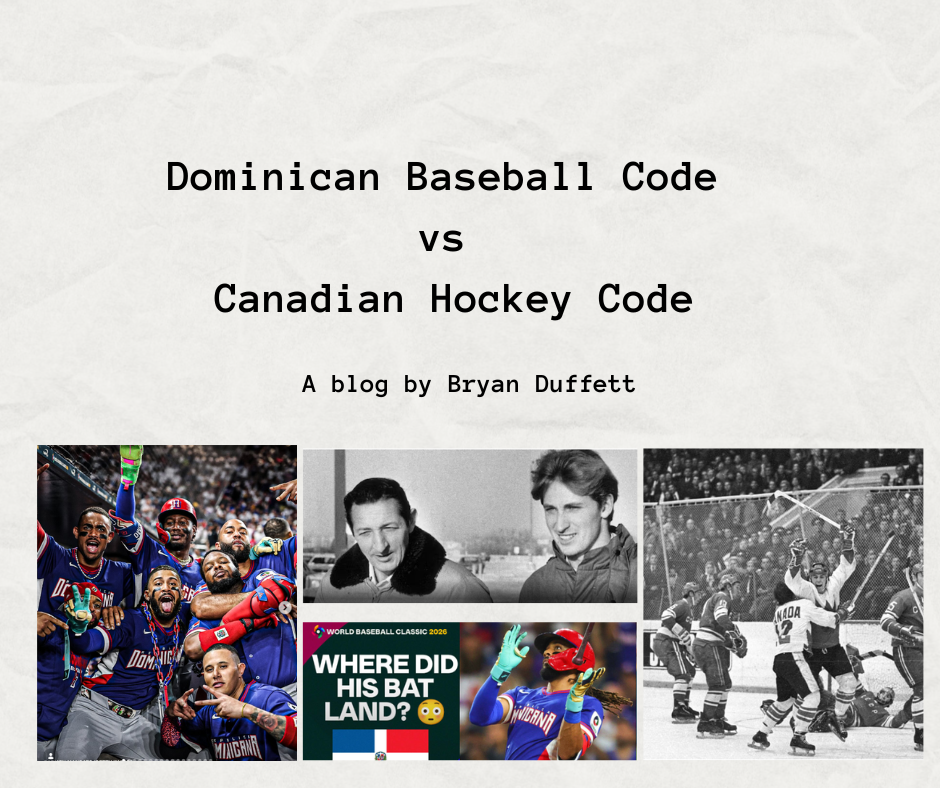
Canadian hockey culture deeply influences how I judge Caribbean baseball.
I’ve picked up on 2 prevalent themes while watching this year’s World Baseball Classic:
1) Elite international baseball. No shit! This truly is best on best and it’s phenomenal.
2) An obvious clash of the unwritten culture codes that govern sport. Here’s where we need help.
The culture clash has a social irony richer than Shohei Ohtani, himself. On one side of the socioeconomic scale there’s the Dominican Republic; poor, in a constant state of scraping for survival, yet having the time of their lives -- and on the other side, Canadian players and fans; socioeconomically rich, safer than 99.9% of any living organism that has ever graced the planet, yet angry, confused, sick and tired.
Forget what you know about Maslow’s Pyramid of Psychological Needs. The pyramid fell over. And Fernando Tatis Jr just moonwalked over its remains.
Getting Over Bullshit as a Prerequisite for Enjoyment
It’s called the World Baseball Classic, not the Conservative Canadian’s Baseball Classic. Before we call the cops on the DR’s party, let’s first acknowledge our own cultural shadow. Perhaps more powerfully put, let’s acknowledge how our dads taught us to play, work, and live life.
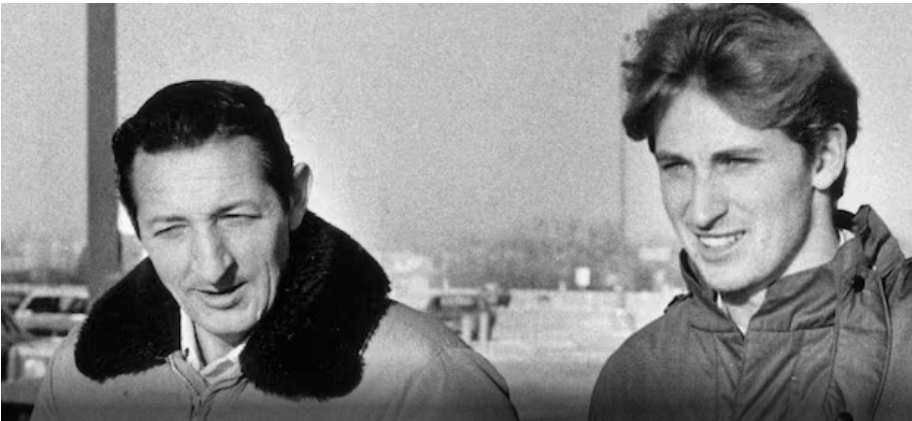
I, and almost every fellow sports fan I know, grew up under the influence of a very specific cultural code: rural Canadian hockey code. Hockey culture self identifies as the “strong silent” type on your corporate sensitivity training’s lunch and learn personality quiz. A pillar of Canadian life, like it or not, reliable as a Caterpillar dump truck. It has its well documented shortcomings (thank you #metoo movement), and it also has its virtues, among them; grit, determination, and hard work.
Even today, I’ll occasionally see a friend's kid on Facebook smiling proudly after receiving the honour of the game’s “hardest working player”. This is cultural conditioning in action. I can’t help but think “they should reward the smartest working player.” Won’t the hardest working kids grow up to be employees of the smartest working kids?
Such is culture, though. Culture is not math, culture is art. And art is stupid.
Culture is the collective lens through which a society views reality, tinting our perception of what is 'normal,' 'right,' or 'fair' before we even have a chance to think for ourselves. All cultures have unwritten rules. They’re the threads that keep the sweater of society from unraveling into a pile of yarn.
In Canada, the unwritten rules of hockey are often treated with more reverence than the actual rulebook. These codes are designed to enforce a specific brand of selflessness, stoicism, and shared burden.
Before I break them down, please note; this is not a critique of hockey code, rather, a highlighting of hockey code as a means to better understand Caribbean baseball and men’s health. Don’t forget to like and subscribe. (haha)
A Brief Analysis of Canadian Hockey Code, i.e. How Our Dads Taught Us to Play
Canadian Hockey Code # 1: Act Like You’ve Been There Before
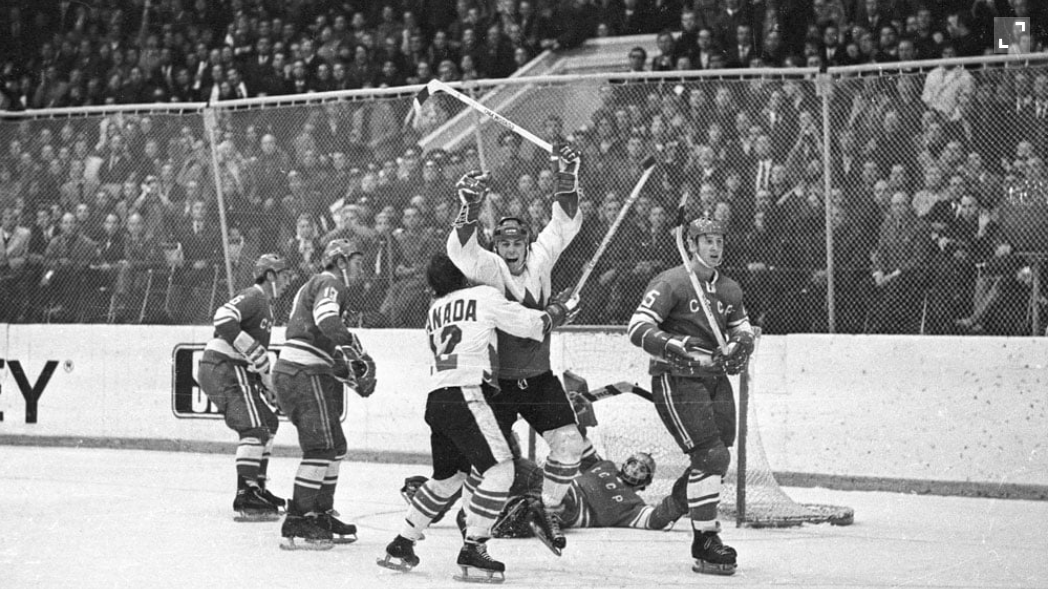
Excessive individual celebrations are seen as a sign of insecurity or a lack of class.
Canadian Hockey Code # 2: Never “Show Up” the Opponent
Never make the other team look worse than the scoreboard already does. If your team is up by five goals in the third period, don't celebrate the sixth goal. To do so is considered dishonorable.
Canadian Hockey Code # 3: The Cult of the Grinder
The player who dives to block a shot with his face is more respected than the superstar who scores a hat trick but avoids getting his nose dirty in the corners. Respect is earned through physical sacrifice. If you are talented but “soft”, you will never fully be accepted into the inner circle of the culture.
Canadian Hockey Code # 4: Public Humility (Emphasizing “We” Over “I”)
Claiming individual glory is seen as a betrayal of the locker room.
Canadian Hockey Code # 5: The Code of Accountability
If a star player is hit hard (even legally), a teammate is expected to “step up” and challenge the hitter. This is where the polite Canadian stereotype disappears; violence is a legitimate tool for maintaining order and mutual respect.
And don’t you just love it!
Back to the WBC--
The Culture Clash
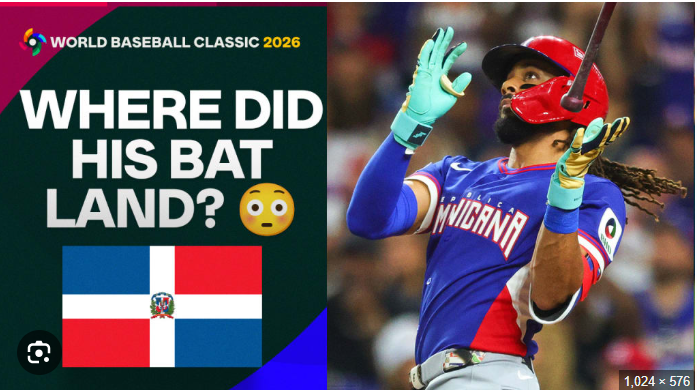
Because I was raised under this code, i.e. taught by my father (or my friend's fathers when my father was working late), I learned that emotion is a distraction and individualism is a threat. When I see a Dominican baseball player dancing in the dugout or flipping a bat, my Hockey Brain interprets it as:
Arrogance (Breaking Hockey Code # 1),
Disrespecting the Pitcher (Breaking Hockey Code # 2), and
Self-Indulgence (Breaking Hockey Code # 4).
In the Dom Rep, the unwritten rules are effectively the inverse of what I was taught in Bonavista.
If Canadian hockey code is about dimming your own light to serve the team, Dominican baseball code is about shining as brightly as possible to honor the game's stakes.
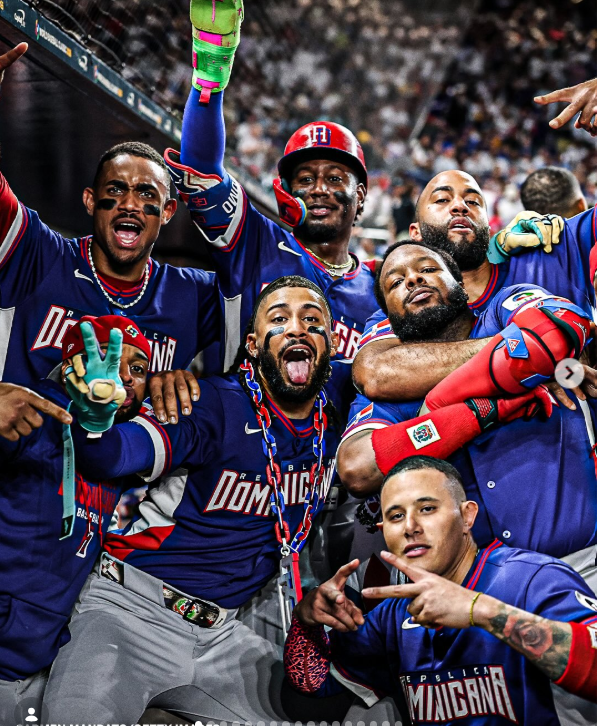
Dominican Baseball Code # 1: Celebration is a Requirement
If you hit a home run and simply put your head down and jog, you are disrespecting your teammates and fans by killing the energy. Playing composed is interpreted as indifference. If you aren't showing emotion, the fans think you don't care. You are expected to pimp the moment. A massive bat flip isn't a taunt to the pitcher; it's a gift to the crowd. Fans pay to see passion. If you don't celebrate, you're denying the fans the party they came for.
Dominican Baseball Code # 2: No-Stoicism Policy
The primary value is authenticity. If you’re mad, show it. If you’re happy, show it. The idea of hiding your heart to look professional is viewed as a strange, cold North American way.
Dominican Baseball Code # 3: The Crowd is the 10th Player
The atmosphere is like a carnival. Players will frequently gesture to the stands, dance in the dugout, or interact with fans during the game. In hockey, looking into the stands is a sign you’ve lost the plot. In the DR, it’s a sign you are connected to the community that put you there.
If a Canadian hockey player played with Dominican baseball code he would be considered by fans and teammates to be an attention seeking whore. They’d think his personality was too big for the team.
If a Dominican baseball player played with Canadian hockey code local fans would call him disrespectful for being cold and robotic. They'd think he was too big for the island.
Isn’t that funny? Even amongst Canadians, Canadian hockey culture is considered cold and robotic. Connor McDavid is accused of being a “hockey robot”, weekly. He’s become so insecure about the label he wrote about it in The Player’s Tribune. Side note: impressive act of vulnerability, Connor. Way to skate to where the puck is going.
Conclusion
Shared social culture keeps our sweater threads in tact and our bodies alive and warm as kids, but as men, it’s helpful to check our sweaters aren’t cutting off our circulation.
Thoreau said, “Most men lead lives of quiet desperation.” Viewing emotion as distraction and individualism as threat may have served me as a member of my Bantam hockey team, but as a fully grown man it holds me back.
Canadian men spend years breaking free from the chains of their cultural conditioning in order to lead lives of authenticity. Many of us remain balled and chained until the day we die.
Both Dominican baseball and Canadian hockey cultures are trying to be respectful in their pursuits of an identical goal: to impress their fathers. They just have completely opposite definitions of what that looks like.
In Canada, celebration is reserved for the final whistle. In the DR, the celebration is the game.
I’ve challenged myself: the next time I see a massive dugout celebration, I’ll say “They aren't playing my game poorly; they are playing their game perfectly.”
We're well into our 4th decade in the theatre of the globalization of North American sports and ladies and gentleman, the show must go on. I dare you to watch your 10 year old hockey playing son or daughter celebrate their goal with a choreographed team dance and try not to crack a smile. Remember: they didn’t learn that from you.
Alas, sports debates have their advantages over social debates. Here’s one: There’s a game to be played. Regardless of your cultural DNA, every game ends the same: with a final score. May the best team win.